TV by Cable: 2026 Guide to Costs, Tech & Alternatives
Is watching TV by cable still worth the price in 2026? Compare traditional cable setup, real costs, and modern internet streaming that saves over $1,500/year.
Streaming Tech Specialist
Verified Technical Guide
Key Takeaways & Quick Summary
- 1TV by cable distributes encrypted RF video signals through Hybrid Fiber-Coaxial networks to proprietary decoder boxes.
- 2Mandatory equipment rentals, Broadcast TV surcharges, and RSN fees drive average cable bills to $135–$190/month.
- 3Legacy cable delivers mostly 720p or 1080i interlaced video, whereas modern IPTV provides progressive 1080p and 4K at 60 FPS.
- 4Subscribers can unbundle cable TV, retain standalone cable broadband, and switch to modern internet streaming.
- 5Unified IPTV platforms like IPTVBoz offer 50,000+ live global channels for $14.99/mo, cutting annual entertainment costs by over $1,500.
For decades, receiving tv by cable was the undisputed foundation of home entertainment. From neighborhood coaxial poles to living room set-top decoders, physical cable lines delivered morning news, children's cartoons, and championship sports straight into millions of living rooms.
However, the telecommunications market in 2026 has reached a definitive turning point. With average cable bills soaring past $140 per month and broadband connections achieving gigabit speeds, consumers are increasingly questioning whether traditional coaxial delivery still makes sense.
In this guide, we demystify how tv by cable operates, dissect the hidden surcharges inflating monthly statements, evaluate its technical limits against modern IP video, and explain how to enjoy complete television freedom without rigid contracts.
How TV by Cable Actually Works: The Coaxial Architecture
To understand why tv by cable is so expensive and rigid, it helps to examine the underlying physical infrastructure:
• Signal Ingestion at the Master Headend: Cable operators capture television signals from orbital satellites, local studio links, and fiber networks at large regional facilities known as "headends." • RF Modulation & QAM Encoding: Signals are converted into high-frequency Radio Frequency (RF) waves using Quadrature Amplitude Modulation (QAM), packing dozens of digital channels into specific 6 MHz radio bands. • Hybrid Fiber-Coaxial (HFC) Distribution: Video feeds travel through high-capacity optical fiber trunk lines into neighborhood optical nodes, which convert light pulses back into RF electricity sent through copper coaxial cables to homes. • Physical Decoder Boxes: Because incoming signals are encrypted and modulated, viewers must connect a proprietary set-top decoder box to every screen in the house to tune and decrypt the channels.
While this closed physical network was revolutionary in the late 20th century, it requires massive ongoing capital expenditure to maintain, leading providers to pass these operational costs directly to subscribers.
The Hidden Costs of TV by Cable: Why Monthly Bills Balloon
The advertised promotional rate for tv by cable rarely reflects what subscribers actually pay. In fact, mandatory add-ons routinely inflate invoices by 40% to 60%:
• Broadcast TV Fees ($25 – $35 / mo): A surcharge imposed by cable operators to retransmit over-the-air networks (ABC, CBS, FOX, NBC) that are free over public airwaves. • Regional Sports Network (RSN) Surcharges ($12 – $18 / mo): Mandatory sports fees applied to all subscribers, regardless of whether they follow athletic programming. • Decoder Box Hardware Leases ($10 – $15 / TV / mo): Renting converter boxes for three displays adds $30 to $45 every month purely in equipment fees. • Multi-Room DVR Subscriptions ($10 – $20 / mo): Extra digital storage fees to pause and record broadcast programming. • Franchise Fees & State Regulatory Taxes ($8 – $15 / mo): Municipal fees passed straight onto the customer invoice.
When these mandatory fees are added to a base $60 introductory package, the realistic monthly cost surges to $135 to $190+ per month.
Master Comparison: TV by Cable vs. Modern Internet Streaming
The table below contrasts the everyday experience of watching tv by cable against corporate streaming and unified IPTV:
| Feature / Factor | Traditional TV by Cable | Corporate vMVPD (YouTube TV / Hulu) | Unified IPTV (IPTVBoz) | | :--- | :--- | :--- | :--- | | Realistic Monthly Cost | $135.00 – $190.00+ / mo | $72.99 – $95.00 / mo | $14.99 / mo ($59.99/year) | | Hardware Required | Leased coaxial decoder boxes | Streaming stick / Smart TV | Any Smart TV, Firestick, PC, Phone | | Multi-Display Viewing | Extra $10–$15 per display | Included (Up to 3 streams) | Universal multi-device support | | Resolution & Framerate | 720p / 1080i (30 FPS) | 1080p (60 FPS) / Paid 4K add-on | Full HD 1080p & 4K (60 FPS) | | Mobile & Travel Access | Strictly home-tied to coaxial jack | Location-restricted by ZIP code | Stream anywhere via Wi-Fi / 5G | | Contract Commitments | 12 to 24-month lock-in common | Cancel anytime (No contracts) | Month-to-month or Annual freedom | | Total Channel Lineup | 125 – 220 Channels | 85 – 180 Channels | 50,000+ Worldwide Channels |
To learn how different cable providers compare across regions, explore our review of cable service providers and our guide to television cable company packages.
Key Limitations of TV by Cable in 2026
Subscribers who hold onto traditional coaxial delivery encounter several significant limitations:
1. Fixed Wall Jacks & Unsightly Wiring
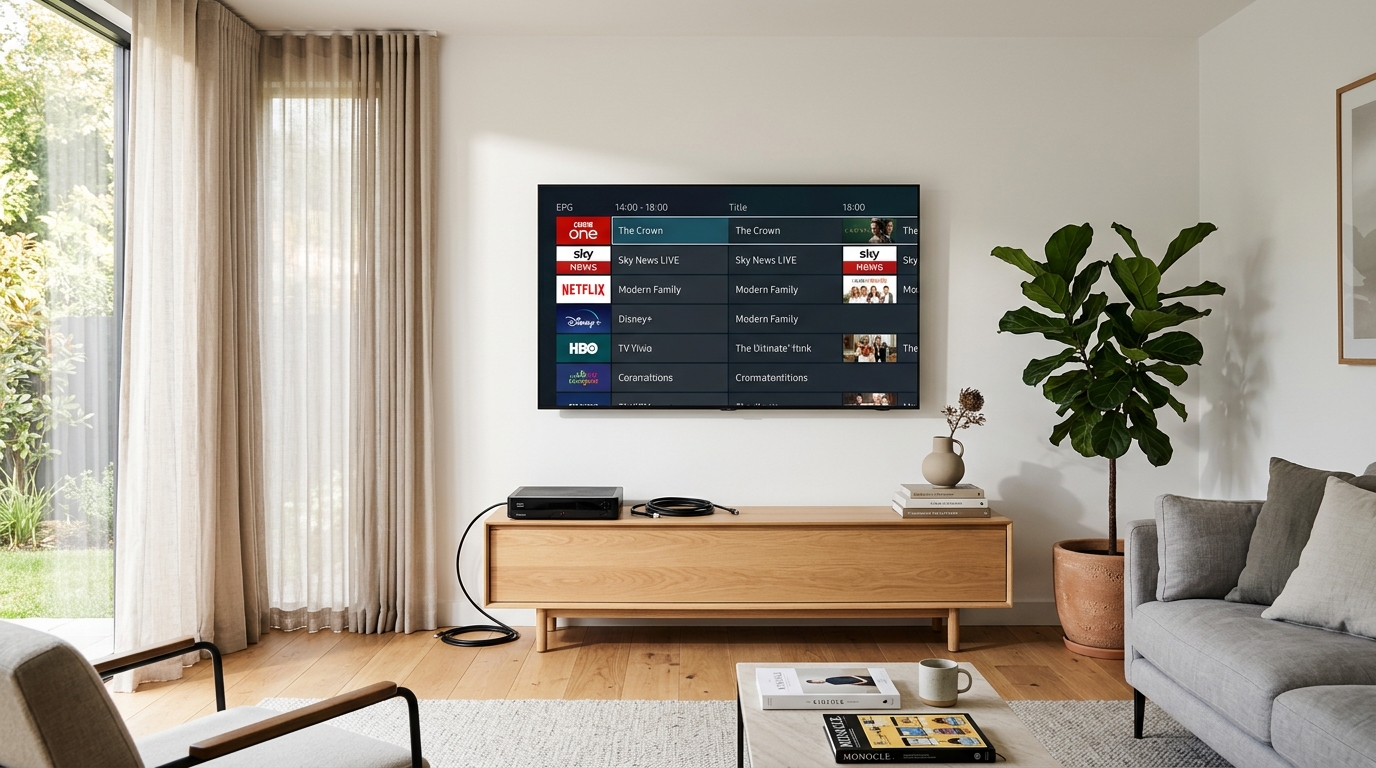
Receiving tv by cable requires placing televisions directly next to coaxial wall outlets. Running thick black coaxial cords across hallways or drilling through drywall limits where you can arrange your furniture and mount flat screens.
2. Dated Interlaced Video Quality
Most traditional cable networks continue to broadcast in outdated 720p or 1080i interlaced video formats due to legacy QAM bandwidth constraints. By contrast, modern IP streaming delivers progressive 1080p and 4K at 60 frames per second, ensuring smoother motion during fast-paced sports.
3. Bloated Channel Bundles
Cable contracts force subscribers to pay for dozens of niche, shopping, and infomercial channels simply to obtain two or three preferred sports or news networks.
4. Zero Portability
When you step out of your front door, your cable connection remains behind. In contrast, internet-delivered television lets you watch live broadcasts on your smartphone, tablet, or laptop while traveling or commuting.
The Smart Alternative: How to Watch TV Without Cable
Transitioning away from coaxial cable to modern IP streaming is simple, cost-effective, and liberates your home entertainment:
1. Keep Standalone Cable Broadband: You can cancel pay-TV without losing your internet connection. Request a standalone broadband tier from your existing provider to maintain high-speed connectivity. 2. Activate Unified IPTV: Sign up for an enterprise-level platform like View IPTV. For just $14.99 per month, you unlock over 50,000 live global channels, complete sports tournament feeds, local broadcast networks, and on-demand movies. 3. Download Agile Media Players: Install proven media players such as IPTV Smarters Pro or TiviMate on your Samsung Smart TV, LG display, or Amazon Firestick. Follow our setup tutorial on IPTV Smarters Pro on Smart TV. 4. Deploy a Free Digital Antenna: A one-time purchase of a digital HDTV antenna provides free uncompressed local broadcasts of ABC, CBS, FOX, and NBC with zero internet bandwidth requirements.
Home Network Optimization for Buffer-Free Streaming
Because modern television is delivered over IP packets rather than RF coaxial lines, maintaining a fast home network guarantees broadcast-level reliability:
• Connect Displays via 5 GHz Wi-Fi or Cat6 Ethernet: Bypass legacy 2.4 GHz wireless bands that suffer from microwave and Bluetooth interference. • Ensure Adequate Speed Headroom: Maintain at least 25 Mbps of dedicated download speed for each simultaneous 4K live broadcast stream. • Shield Streams with a WireGuard VPN: If your internet provider throttles video during peak sports broadcasts, connect via an encrypted streaming VPN to preserve full throughput. See our dedicated guide on how to fix IPTV buffering.
Check our best streaming service comparison chart and guide to streaming services with local channels to make an informed decision.
Frequently Asked Questions
What does TV by cable mean?
TV by cable refers to receiving linear television programming delivered through physical copper coaxial cables from a local telecommunications provider, requiring a set-top converter box connected to your display.
Is TV by cable being phased out?
Yes. Major telecommunications operators are actively transitioning away from legacy QAM coaxial television toward pure IP-based video delivery, encouraging subscribers to use streaming apps rather than leasing physical set-top boxes.
Can I watch TV by cable on my mobile phone?
Traditional cable service does not natively support mobile viewing without proprietary provider apps, and many live channels are blacked out when you are away from your home Wi-Fi network. Unified IPTV platforms like IPTVBoz allow you to stream all channels anywhere on any mobile device.
How can I watch local and sports channels without TV by cable?
You can access all local broadcast networks and championship sports feeds using unified IPTV services like IPTVBoz, corporate streaming platforms (YouTube TV, Hulu), or an over-the-air digital HDTV antenna.
What is the most affordable alternative to TV by cable?
Unified IPTV services like IPTVBoz represent the most budget-friendly solution, offering over 50,000 live HD/4K channels worldwide for just $14.99 per month, saving typical households more than $1,500 every year compared to traditional cable packages.
Need Help Configuring Your Setup?
Our team is active on WhatsApp (+44 7934 683184) and email (tvplusone24@gmail.com) to walk you through playlist setup, recommend media players, or activate your subscription instantly.