Best TV Subscription Options: The Ultimate Guide to Modern Television Plans
The ultimate guide comparing modern TV subscription options, live cable alternatives, multi-connection scaling, and network optimization for buffer-free 4K viewing.
Streaming Tech Specialist
Verified Technical Guide
Key Takeaways & Quick Summary
- 1Modern internet-based TV subscriptions eliminate hardware rental fees and binding annual contracts, providing flexible month-to-month access.
- 2Core service models include vMVPD (full live cable replacements), specialized IPTV plans (global channels and multi-room flexibility), and FAST platforms.
- 3Multi-connection allowances allow households to run 2, 3, or 4 simultaneous streams under a single account without channel conflicts.
- 4Optimal streaming performance requires 10 Mbps per 1080p stream, 25-35 Mbps for 4K sports, and prioritization of 5 GHz Wi-Fi or hardwired Cat6 Ethernet.
The era of paying bloated utility bills for rigid cable packages is officially over. Choosing a modern tv subscription powered by high-speed internet allows households to access thousands of high-definition live channels, premier sports networks, local affiliate stations, and sprawling on-demand catalogs at a fraction of legacy broadcast costs.
Unlike traditional broadcast contracts that lock consumers into multi-year commitments with proprietary receiver fees, internet-based television packages offer complete month-to-month flexibility. This comprehensive guide breaks down how digital TV subscriptions operate, supported by our device setup guides and transparent IPTV pricing.
What Is a Modern TV Subscription?
A modern TV subscription delivers linear television programming and on-demand entertainment over public or private Internet Protocol (IP) networks rather than dedicated coaxial cables or satellite dishes. By unbundling content delivery from physical carrier lines, viewers can stream their favorite programming directly through lightweight software applications installed on existing consumer devices.
Modern subscription models generally fall into three distinct operational categories: Virtual MVPDs (vMVPD) providing cloud-delivered domestic cable lineups, specialized IPTV subscriptions offering extensive international channels and flexible multi-room plans, and hybrid on-demand platforms pairing curated libraries with live simulcasts.
Regardless of the model you select, the core appeal remains consistent: complete freedom from hardware rental fees, straightforward month-to-month billing, and universal cross-device accessibility.
How Internet-Delivered TV Subscriptions Work
Transitioning to internet television replaces traditional radio-frequency modulation with packetized digital data transmission. High-throughput hardware encoders compress source broadcasts using modern codecs like H.264 or HEVC (H.265), reducing data overhead by nearly 50% without quality degradation.
The compressed video is divided into discrete media chunks (two to six seconds) and distributed across globally cached Content Delivery Networks (CDNs). Client applications request these chunks via HTTP Live Streaming (HLS) or MPEG-DASH protocols.
Through Adaptive Bitrate Streaming (ABR), your player constantly monitors real-time bandwidth. If momentary network congestion occurs, playback dynamically adjusts bitrate profiles rather than halting into an interrupting buffer sequence.
Key Features to Look for in a Premium TV Subscription
Not all subscription packages deliver equal performance. Premier TV subscription services stand out through multi-connection allowances, synchronized electronic program guides, cloud DVR, and high-frame-rate sports delivery.
1. Multi-Connection Allowances
Households with multiple family members require multi-room flexibility. Look for services that support two, three, or four concurrent connections under a single account so family members can watch different channels simultaneously.
2. Comprehensive Electronic Program Guide (EPG)
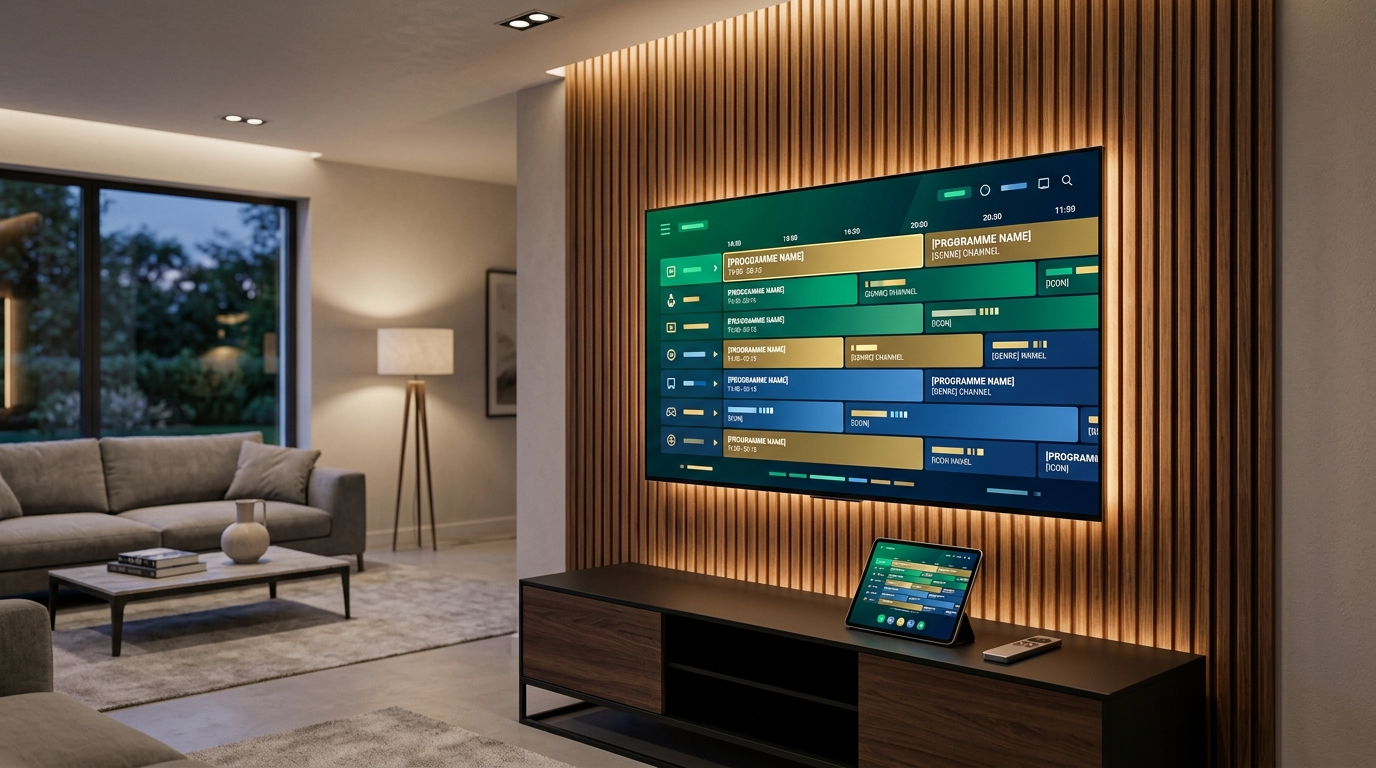
A responsive, multi-day EPG is indispensable for linear television. Premier providers supply synchronized XMLTV data feeds that populate complete grid guides with channel logos and real-time scheduling markers.
3. Cloud DVR and High-Frame-Rate Sports
Cloud-based DVR services store recordings remotely on high-capacity servers. Furthermore, top-tier subscriptions transmit live sporting events at native 60 fps to ensure fluid on-screen motion without blur.
Important Factors to Consider Before Subscribing
Before committing to a provider, confirm local affiliate availability (ABC, CBS, NBC, FOX) within your market area, verify regional sports network (RSN) broadcast carriage, check device compatibility across your Smart TVs and streaming sticks, and avoid services with hidden broadcast fees or cancellation penalties.
For households seeking expansive international sports feeds, comprehensive entertainment lineups, and dependable multi-room plans, exploring specialized IPTV subscription plans provides a modern, high-value alternative.
Step-by-Step Guide: How to Choose and Set Up a TV Subscription
Transitioning to an internet-delivered television plan requires minimal technical effort:
1. Audit Household Viewing Priorities: Identify indispensable channels, sports networks, and local news broadcasts to avoid overspending on oversized programming tiers.
2. Benchmark Home Broadband Capacity: Verify speeds of at least 10 Mbps per 1080p stream and 25-35 Mbps per 4K screen using an independent speed test.
3. Acquire Dedicated Streaming Hardware: Utilize dedicated players like Apple TV 4K, Chromecast with Google TV, Roku Ultra, or Fire TV Stick 4K Max for fast processing and reliable Wi-Fi.
4. Register and Test via Flexible Short-Term Plans: Begin with a flexible one-month or three-month plan to evaluate channel switching speeds and server stability during peak hours.
5. Configure Application Settings and EPG Guides: Install your client app, input credentials, set up automatic EPG sync, and curate your daily favorites list.
6. Disconnect and Return Legacy Cable Hardware: Cancel legacy video packages, retain your broadband link, and return leased cable receivers to eliminate hardware rental fees.
Performance and Network Optimization Tips
Because linear television feeds are real-time, implement these technical best practices:
Hardwired Ethernet: Connect primary streaming players to your router via Cat6 Ethernet cable to eliminate radio interference and packet jitter.
5 GHz & Wi-Fi 6 Bands: Connect wireless devices exclusively to 5 GHz or Wi-Fi 6 bands, elevate the router, and configure router Quality of Service (QoS) rules.
Adjust Player Buffer Size: Configure the software buffer in your player settings to "Large" (3-5 seconds) to absorb temporary connection dips without interrupting playback.
Match Refresh Rates: Enable "Match Frame Rate" in display settings to match native broadcast frequencies (24 Hz for movies, 60 Hz for sports) without judder.
Safety, Privacy, and Account Security
Protect subscription accounts with unique passwords and two-factor authentication. Beware of fraudulent third parties advertising "lifetime access" for nominal fees, as these unauthorized services frequently disappear.
Reputable streaming platforms operate within established legal frameworks and copyright permissions, ensuring stable and reliable long-term service availability.
While a VPN encrypts traffic and prevents ISP bandwidth throttling during peak sports broadcasts, using a VPN does not alter the underlying legality of content distribution.
Frequently Asked Questions
How much does a reliable modern TV subscription cost per month?
A dependable modern TV subscription generally ranges from $14.00 to $25.00 per month for entry-level digital and specialized IPTV tiers, while large commercial vMVPD packages cost between $45.00 and $85.00 monthly. Longer commitments often reduce effective rates to under $10.00/month.
Can I use one TV subscription across multiple screens simultaneously?
Yes, provided your subscription tier includes multi-connection allowances. Standard plans permit 1 or 2 concurrent streams, while family tiers support 3 or 4 simultaneous connections so household members can watch different channels concurrently.
Do internet TV subscriptions require long-term contracts or credit checks?
No. Unlike traditional cable and satellite installations that mandate 12-to-24-month binding contracts, hardware leasing, and credit screenings, modern digital TV subscriptions operate on straightforward pay-as-you-go billing with zero cancellation fees.
What internet download speed is required for seamless 4K TV streaming?
To stream live television in Full HD (1080p), you need a stable downstream connection of at least 10 Mbps per active device. For native 4K Ultra HD broadcasts and high-frame-rate 60 fps sporting events, maintain at least 25 to 35 Mbps per stream.
Need Help Configuring Your Setup?
Our team is active on WhatsApp (+44 7934 683184) and email (tvplusone24@gmail.com) to walk you through playlist setup, recommend media players, or activate your subscription instantly.