Best Streaming TV Service: 2026 Ratings, Plans & Value
Discover the best streaming TV service in 2026. Compare live channel counts, sports coverage, multi-screen streaming, and real monthly value to cut the cord.
Streaming Tech Specialist
Verified Technical Guide
Key Takeaways & Quick Summary
- 1Finding the best streaming TV service requires balancing essential channel availability, native 60 FPS sports stability, multi-screen streaming, and transparent pricing.
- 2Mainstream corporate platforms like YouTube TV ($72.99+/mo) and Hulu + Live TV ($76.99+/mo) offer polished cloud DVR but have become nearly as expensive as legacy cable.
- 3IPTVBoz IPTV earns top honors as the best streaming TV service for overall value, packaging 50,000+ live HD and 4K channels with 40,000+ VOD titles for just $14.99/mo.
- 4Fubo TV leads traditional platforms for sports variety but levies regional sports surcharges that push monthly bills beyond $90.
- 5Sling TV serves as the best budget traditional alternative ($40–$55/mo), though it restricts local broadcast affiliate access and cloud DVR storage.
Finding the best streaming tv service is no longer just about escaping the frustrating surcharges of traditional cable. With dozens of digital platforms now competing for your monthly budget, viewers need an agile service that balances comprehensive live channels, reliable sports broadcasts, and affordable pricing.
While mainstream corporate streaming apps have steadily increased their subscription fees past $75 to $90 every month, next-generation IP television providers have emerged to deliver tens of thousands of channels at a fraction of the cost.
In this guide, we evaluate the top contenders in 2026, compare real channel counts and stream performance, break down multi-screen capabilities, and reveal which platform delivers the highest entertainment value for your household.
What Defines the Best Streaming TV Service in 2026?
Determining the top streaming television provider requires looking past promotional marketing. A service that advertises a high channel count filled with automated loops and shopping networks offers little real value to the everyday viewer.
When benchmarking each platform, four essential pillars separate industry leaders from mediocre services:
• Broadcast Stability & Frame Rates: Fast-moving live sporting events require native 60 frames-per-second (FPS) feeds and resilient Content Delivery Networks (CDNs) to prevent buffering during high-traffic championship games. • Essential Network Availability: Dependable access to major broadcast networks (ABC, CBS, NBC, and FOX), 24/7 news channels, and premier entertainment hubs. • Multi-Screen Flexibility: The ability for household members to stream different programs simultaneously across multiple rooms and mobile devices. • Transparent Pricing: Freedom from surprise fees, mandatory equipment leases, and long-term contract lock-ins.
The Top Streaming TV Services Tested & Ranked
To help you choose the right platform for your viewing habits, we analyzed the leading live television services across features, channel breadth, and monthly costs:
1. IPTVBoz IPTV — Best Overall Value & Global Channel Lineup
Taking the top spot for overall value, View IPTV delivers an unmatched catalog of live entertainment. Rather than limiting viewers to 80 or 100 domestic channels, IPTVBoz provides over 50,000 live international and domestic channels alongside more than 40,000 on-demand movies and series.
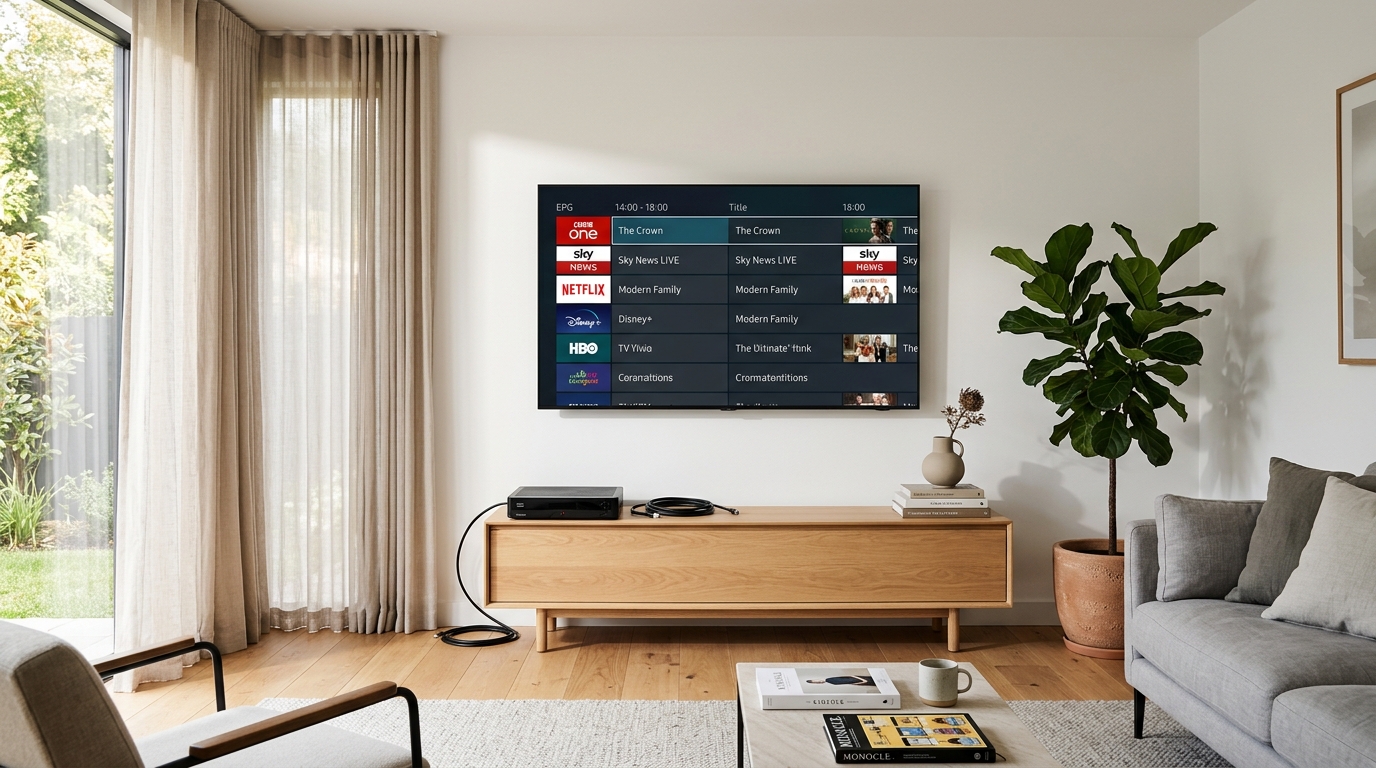
Subscribers enjoy crystal-clear 1080p and 4K UHD sports streams, integrated Electronic Program Guides (EPG), and compatibility across Amazon Fire TV, Apple TV, Smart TVs, Android, and PC. With plans starting at just $14.99 per month or $59.99 for an entire year, IPTVBoz provides the greatest entertainment value available today.
2. YouTube TV — Best Mainstream Cable Replacement
YouTube TV remains the premier corporate virtual cable replacement. Its streamlined interface, responsive navigation, and unlimited cloud DVR storage make it simple to browse live content.
The service includes around 100 core channels with excellent local affiliate coverage across almost every US television market. However, with monthly subscription rates sitting at $72.99+ (plus optional sports add-ons), it represents a premium recurring expense.
3. Hulu + Live TV — Best for Bundled On-Demand Libraries
Hulu + Live TV combines 95+ live broadcast channels with Disney's extensive on-demand streaming ecosystem. Subscribers gain access to the complete Hulu on-demand library, Disney+, and ESPN+ within a single account.
While convenient for families already paying for those standalone streaming apps, Hulu + Live TV costs around $76.99 to $89.99 per month. It also enforces strict home-network location rules that complicate streaming while traveling.
4. Fubo TV — Best Traditional Service for Sports Enthusiasts
Fubo was originally built around soccer streaming and has expanded into an expansive live TV service featuring over 180 channels. It provides extensive regional sports network (RSN) coverage and dedicated sports multivariable feeds.
However, Fubo assesses mandatory regional sports surcharges that can add $11 to $15 per month on top of its $79.99 base price. This makes it one of the most expensive live TV apps on the market.
5. Sling TV — Best Budget Mainstream Option
Sling TV offers a modular approach to cord-cutting through its Sling Orange and Sling Blue packages ($40 per month each, or $55 combined). It allows viewers to access core cable networks like ESPN, CNN, and AMC on a budget.
The primary drawback is its incomplete local broadcast coverage, requiring viewers to use an antenna for local channels in many regions. Sling also limits baseline cloud DVR recording to 50 hours.
Detailed Comparison: Contenders Side-by-Side
Compare the key specifications across top live television platforms: • IPTVBoz IPTV: 50,000+ channels | $14.99/mo ($59.99/yr) | Up to 3 Connections | Included 4K / 60 FPS | Best for Ultimate Value & Global Channels • YouTube TV: 100+ channels | $72.99/mo | 3 Streams | Paid 4K Plus Add-on | Best for Seamless Cloud DVR & Usability • Hulu + Live TV: 95+ channels | $76.99–$89.99/mo | 2 Streams | Limited 4K Events | Best for Disney & Hulu Bundle Lovers • Fubo TV: 180+ channels | $79.99/mo + RSN Fees | 10 Home Streams | Select 4K Broadcasts | Best for Hardcore Sports Viewers • Sling TV: 30–45 channels | $40.00–$55.00/mo | 1 to 3 Streams | Limited | Best for Budget Mainstream Cable Cuts
To understand how conventional coaxial cable packages compare against these digital alternatives, read our in-depth analysis of cable television plans and our technical IPTV vs Cable TV breakdown.
Why Modern IPTV Has Overtaken Conventional Streaming Apps
The streaming landscape is experiencing a noticeable shift. While early cord-cutters embraced corporate apps like YouTube TV and Hulu, consecutive price hikes have driven monthly bills right back to traditional cable levels.
Modern IPTV networks solve this dilemma through superior infrastructure:
1. Unicast Server Networks: Video chunks are delivered directly via optimized international CDNs, ensuring high-bitrate video with low latency. 2. HEVC / H.265 Compression: Advanced video codecs deliver pristine 1080p60 and 4K image fidelity without consuming excessive home internet bandwidth. 3. No Geographic Blackouts: Viewers can follow their home teams and international leagues regardless of regional broadcast licensing restrictions. 4. Hardware Independence: High-performance media clients like IPTV Smarters Pro and TiviMate run smoothly on existing Amazon Fire TV Sticks, Apple TVs, and Smart TVs without dedicated hardware rentals.
Buyer Decision Framework: How to Select Your Ideal Service
Before picking a service, walk through this quick 4-step checklist:
1. Count Your Household Viewing Screens: Identify how many people in your home watch television at the same time. If family members in different rooms watch news, cartoons, and sports concurrently, confirm your chosen provider supports multiple simultaneous connections. 2. Verify Your Internet Connection: Live HD and 4K streaming requires reliable broadband. A stable download speed of 25 Mbps is ideal for a single high-definition stream, while 50 to 100 Mbps accommodates multi-room household streaming simultaneously. 3. Check Channel Essentials: Make a quick list of your 10 to 15 non-negotiable channels. Ensure your prospective platform carries those specific networks without requiring costly add-on tiers. 4. Test with Flexible Month-to-Month Access: Avoid committing to annual contracts before testing real-world stream stability on your home network. Opt for flexible month-to-month plans or low-risk trial periods.
Discover additional options in our guide to the best live TV streaming services and our guide to the cheapest live TV streaming services.
Frequently Asked Questions
What is the best streaming TV service overall?
For total channel volume, global sports coverage, and exceptional pricing, IPTVBoz IPTV is the best streaming TV service overall. It provides over 50,000 live channels and 40,000+ VOD titles for just $14.99 per month. For viewers who prefer corporate platforms with unlimited cloud DVR, YouTube TV is a top traditional choice.
Can I watch local broadcast channels on a streaming TV service?
Yes. Top services provide live local network feeds for ABC, CBS, NBC, and FOX. Premium IPTV services deliver local feeds from across the country, allowing viewers to keep up with hometown broadcasts from anywhere.
Does streaming TV use a lot of internet data?
Streaming standard high-definition video consumes roughly 1.5 GB to 3 GB of data per hour, while 4K video consumes between 7 GB and 10 GB per hour. If your internet service provider imposes a data cap, monitor your monthly usage accordingly.
Do I need a smart TV to use a streaming TV service?
No. While smart TVs with built-in app stores work seamlessly, any television with an HDMI port can be upgraded with an affordable streaming media player such as an Amazon Fire TV Stick, Google Chromecast, Apple TV, or Roku.
How do I switch from cable to a streaming TV service?
First, ensure you have a reliable internet connection (at least 25 to 50 Mbps). Next, set up your preferred streaming player or download the app onto your smart TV. Finally, activate your chosen streaming subscription, confirm your favorite channels, and return your leased cable hardware.
Need Help Configuring Your Setup?
Our team is active on WhatsApp (+44 7934 683184) and email (tvplusone24@gmail.com) to walk you through playlist setup, recommend media players, or activate your subscription instantly.