Live TV Streaming Service: 2026 Cord-Cutter's Guide
Find the perfect live tv streaming service in 2026. Compare local channels, sports packages, cloud DVR, and discover how to stream buffer-free without cable.
Streaming Tech Specialist
Verified Technical Guide
Key Takeaways & Quick Summary
- 1A modern live TV streaming service transmits real-time linear broadcasts over IP networks without proprietary cable converter box leases.
- 2Big-tech cable replacements like YouTube TV ($72.99+/mo) and Hulu + Live TV ($76.99+/mo) have become nearly as costly as legacy cable bundles.
- 3Key features to evaluate before subscribing include local broadcast coverage (ABC, CBS, NBC, FOX), 60 FPS sports fluidity, and multi-device concurrency.
- 4Dedicated streaming hardware like the Apple TV 4K or Fire TV Stick 4K Max significantly outperforms built-in smart TV processors in menu responsiveness.
- 5Enterprise IPTV platforms like IPTVBoz offer the highest price-to-performance value, delivering 50,000+ live HD and 4K channels for just $14.99/mo.
Switching to a reliable live tv streaming service is the single most effective way to eliminate bloated cable bills without sacrificing real-time news, primetime series, or live sports. Over the past few years, linear television has migrated from proprietary copper coaxial cables to high-speed broadband connections, giving viewers greater flexibility across every screen in their home.
However, selecting the right service is not simply a matter of picking the most heavily advertised brand. Mainstream cable-replacement apps now charge over $75 to $85 per month, closely mirroring the high prices of traditional pay-TV.
In this guide, we break down how modern live TV streaming platforms work, evaluate the key features that separate mediocre services from premium providers, and show you how to secure thousands of live channels at a fraction of legacy prices.
What Defines a Modern Live TV Streaming Service?
A live tv streaming service transmits real-time linear television broadcasts over standard Internet Protocol (IP) networks. Instead of renting an expensive set-top tuner box from a local telecom company, you stream broadcasts directly through lightweight applications installed on Smart TVs, streaming media sticks, tablets, or phones.
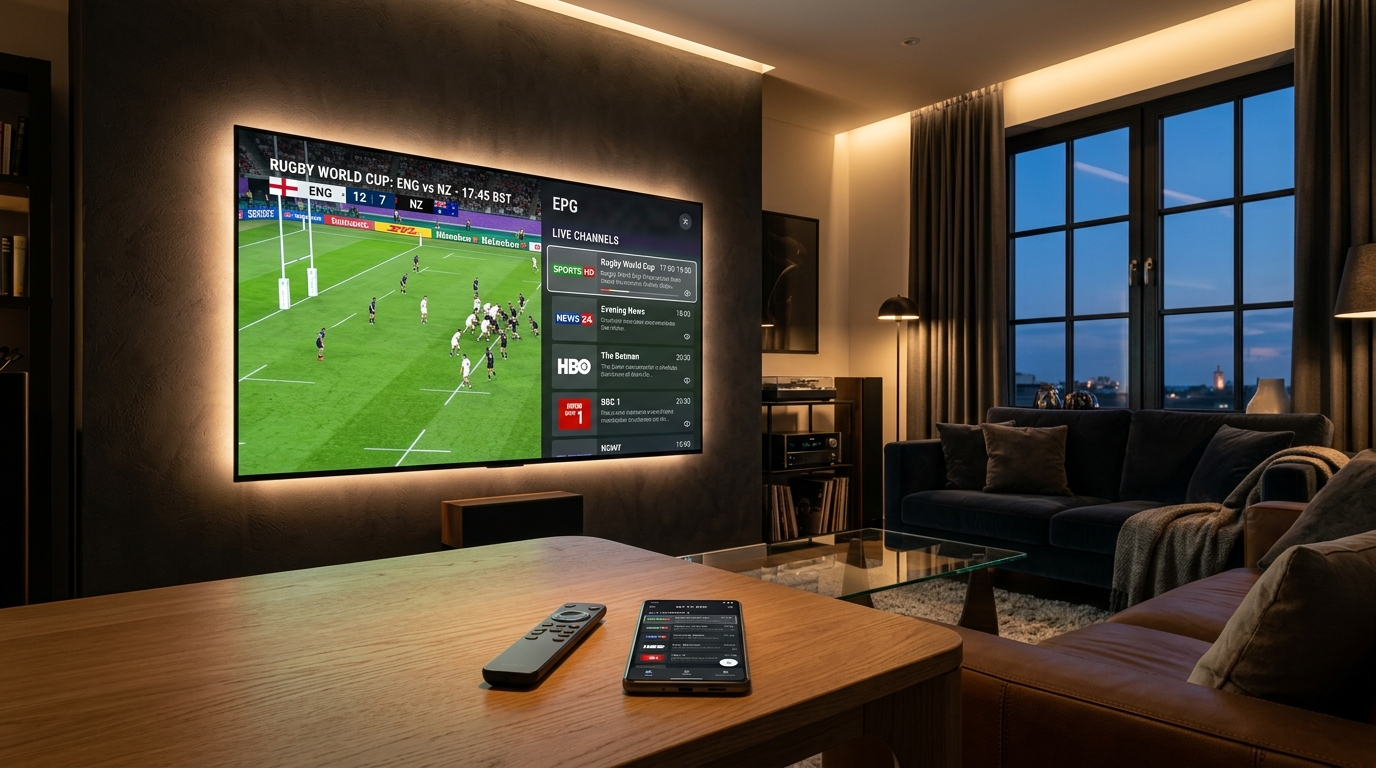
• Linear Synchronization: Unlike on-demand platforms that stream pre-recorded video files from a storage server, live TV delivers synchronous broadcasts in real time with minimal latency. • Electronic Program Guide (EPG): Digital program guides provide intuitive timeline grids showing current and upcoming programming across hundreds or thousands of channels. • Adaptive Bitrate Streaming (ABR): Intelligent video players automatically adjust stream quality to match real-time network conditions, preventing sudden buffering freezes during high-traffic sports events. • Hardware Independence: Viewers can access their subscriptions across Amazon Fire TV, Apple TV, Google TV, Android, iOS, or web browsers without technician appointments or coaxial splitters.
4 Essential Pillars to Evaluate Before Choosing
When evaluating any potential live tv streaming service, consider these four core criteria to ensure the platform fits your household's entertainment routine:
1. Local Broadcast Channels
A dependable service must carry essential local affiliates—ABC, CBS, NBC, and FOX—in your designated market area (DMA). These networks provide vital local morning news, weather warnings, and major weekend sporting events.
2. High-Frame-Rate Sports (60 FPS)
Watching fast-paced sports like football, basketball, and hockey at 30 frames per second causes noticeable motion blur and judder. Top-tier providers deliver native 1080p and 4K streams at 60 FPS for fluid action.
3. Simultaneous Stream Capacity
Ensure your plan supports enough concurrent screens for your entire household. Services that restrict streaming to a single display force family members to negotiate viewing schedules.
4. True Pricing vs. Hidden Add-Ons
Scrutinize the fine print for extra charges. While legacy providers add broadcast fees, regional sports fees, and box rentals, premium IP services provide all-inclusive pricing without surprise billing jumps.
Comparing the Leading Live TV Streaming Service Categories
The modern live television ecosystem is divided into three distinct service architectures:
• Big-Tech Virtual MVPDs (YouTube TV, Hulu + Live TV, Fubo): These services serve as direct digital replicas of traditional cable. They include unlimited cloud DVR, major cable news channels, and local networks. However, continuous price increases have pushed their starting rates to $72.99–$79.99 per month, making them an expensive proposition for budget-conscious cord-cutters. • Budget "Skinny" Bundles (Sling TV, Philo): Skinny bundles offer lower monthly costs ($28 to $40/mo) by intentionally stripping away costly channels. Philo eliminates all live sports and local affiliates to keep costs low, while Sling TV divides key channels between "Orange" and "Blue" packages, often requiring viewers to purchase both to get complete coverage. • Unified Global IPTV (View IPTV): For comprehensive global entertainment, View IPTV delivers an unrivaled value proposition. Instead of restricting viewers to 80 or 100 domestic channels, IPTVBoz provides access to over 50,000 live channels worldwide, comprehensive regional sports passes, and more than 40,000 on-demand titles starting at just $14.99 per month.
Feature & Cost Comparison Matrix
The table below contrasts the leading live TV streaming options available in 2026:
| Service Provider | Monthly Base Cost | Live Channel Count | Native 60 FPS Sports | Simultaneous Screens | Contract Required | | :--- | :--- | :--- | :--- | :--- | :--- | | **IPTVBoz IPTV | $14.99 / mo ($59.99/yr) | 50,000+ Channels | Yes (1080p & 4K / 60 FPS) | Multi-Device Support | No Contract | | YouTube TV | $72.99 / mo | 100+ Channels | Yes | 3 Devices | No Contract | | Hulu + Live TV | $76.99 / mo | 95+ Channels | Yes | 2 Devices | No Contract | | Fubo TV | $79.99 + RSN Fees / mo | 180+ Channels | Yes (Select 4K) | 10 Home Devices | No Contract | | Sling TV (Orange + Blue) | $55.00 / mo | 45+ Channels | Select Channels | 1–3 Devices | No Contract | | Philo** | $28.00 / mo | 70+ Channels | Limited | 3 Devices | No Contract |
To learn more about how streaming compares to traditional cable packages, see our comprehensive guide to cable service providers and explore our analysis of cable television plans.
Technical Tips for Buffer-Free Live TV Playback
Streaming live broadcasts requires steady throughput and low latency. Follow these practical tips to maintain smooth, buffer-free viewing:
1. Prioritize 5 GHz Wi-Fi or Ethernet: Live high-bitrate video streams are susceptible to 2.4 GHz wireless congestion. Connect your streaming media player directly via Ethernet or connect to the 5 GHz band of your Wi-Fi router. 2. Ensure Adequate Download Bandwidth: Allocate at least 15 Mbps for standard 1080p live streams and 25 to 35 Mbps for dedicated 4K broadcasts to accommodate network fluctuations. 3. Use Dedicated Streaming Hardware: Dedicated media devices like the Apple TV 4K or Amazon Fire TV Stick 4K Max deliver substantially faster channel tuning and smoother guide scrolling than underpowered smart TV built-in processors. 4. Deploy a Fast Streaming VPN: If your Internet Service Provider throttles live video traffic during popular sporting events, using a reputable VPN with the WireGuard protocol bypasses traffic shaping and stabilizes stream delivery.
Discover our detailed performance benchmarks in our best streaming service comparison chart and read our guide to streaming TV.
Frequently Asked Questions
What internet speed do I need for a live tv streaming service?
For smooth high-definition 1080p live TV streaming, a reliable connection of at least 15 Mbps per device is recommended. For 4K live broadcasts, maintain a minimum download speed of 25 to 35 Mbps.
Can I get my local broadcast channels on a live tv streaming service?
Yes. Leading platforms include local ABC, CBS, NBC, and FOX affiliates. Alternatively, you can combine a digital over-the-air (OTA) antenna with an IPTV subscription like IPTVBoz to access both local networks and international channels seamlessly.
Are there long-term contracts with live TV streaming services?
No. Unlike traditional cable companies that lock customers into 12-to-24-month service contracts, modern live streaming services operate on flexible month-to-month subscriptions that can be cancelled or resumed anytime.
How does cloud DVR work compared to a cable box DVR?
Cloud DVR records broadcasts directly on the provider's remote servers rather than on a physical hard drive in your living room. This allows you to schedule recordings and watch stored programs from any compatible device with an internet connection.
What is the most cost-effective live tv streaming service in 2026?
For maximum channel selection and price-to-performance value, IPTVBoz IPTV ranks as the most cost-effective solution, offering over 50,000 live global channels and sports passes for only $14.99 per month.
Need Help Configuring Your Setup?
Our team is active on WhatsApp (+44 7934 683184) and email (tvplusone24@gmail.com) to walk you through playlist setup, recommend media players, or activate your subscription instantly.