Cable Services: Top Providers, True Costs & Alternatives
Explore modern cable services in 2026. Compare top providers, unpack real monthly costs and fees, and discover smarter high-speed streaming alternatives.
Streaming Tech Specialist
Verified Technical Guide
Key Takeaways & Quick Summary
- 1Modern cable services encompass broadband internet (DOCSIS 3.1/4.0), linear television programming, digital VoIP home phone, and smart home security.
- 2Major cable providers—Comcast Xfinity, Charter Spectrum, Cox, and Optimum—face rapid subscriber attrition as consumers push back against rising invoices.
- 3Hidden fees (Broadcast TV fees of $25–$34/mo, sports fees of $12–$20/mo, and box leases of $12–$15/mo) drive actual monthly statements past $160–$210/mo.
- 4Unbundling traditional cable services by keeping standalone broadband and pairing it with IPTVBoz IPTV delivers 50,000+ live channels for $14.99/mo.
- 5Purchasing your own DOCSIS modem and replacing leased set-top decoders saves households between $1,200 and $1,800 annually.
For decades, subscribing to cable services was the undisputed standard for connecting American households to news, live entertainment, and home communications. Multi-System Operators (MSOs) built vast underground Hybrid Fiber-Coaxial (HFC) networks, controlling both the pipeline and the programming delivered to living room displays.
However, the telecom landscape in 2026 has reached a dramatic turning point. With cord-cutting accelerating and consumers pushing back against bloated invoices, the definition and value of traditional cable services are undergoing massive disruption.
In this guide, we examine the current state of cable services, compare the largest providers in North America, expose the hidden surcharges behind rising monthly statements, and explore how high-speed IP streaming delivers superior entertainment freedom.
The Evolving Scope of Modern Cable Services
While most people associate cable primarily with television channels, modern cable services encompass a broader suite of household utilities delivered across physical telecommunications infrastructure:
• High-Speed Broadband Internet: Cable operators utilize Data Over Cable Service Interface Specification (DOCSIS 3.1 and DOCSIS 4.0) standards to deliver download speeds up to 1 Gbps to 2 Gbps over copper coaxial drops. • Linear Video Programming: Traditional television delivered via Quadrature Amplitude Modulation (QAM) tuners into proprietary converter boxes. • Digital Voice (VoIP): Fixed landline telephone connections routed through broadband modems. • Smart Home & Security: Connected monitoring systems, automated doorbells, and cellular backup sensors.
Because customer video margins have eroded due to high network carriage costs, cable companies increasingly treat television as a secondary product, prioritizing high-speed broadband as their primary profit driver.
Leading Cable Services Providers in 2026
The telecommunications landscape is dominated by regional franchise agreements, meaning most households have access to only one or two local physical cable operators:
• Comcast Xfinity: As the nation's largest cable operator, Xfinity serves over 30 million customer relationships across 39 states. Known for its responsive X1 entertainment operating system and voice remote, Xfinity delivers fast broadband and extensive channel packages. However, second-year price jumps and steep regional sports fees remain persistent consumer complaints. • Charter Spectrum: Operating under the Spectrum brand, Charter is the second-largest provider, serving 41 states. Spectrum distinguishes itself by eliminating multi-year service contracts across its TV and internet tiers. While contract flexibility is convenient, mandatory local broadcast surcharges and standard second-year rate increases still inflate billing statements. • Cox Communications: Cox is a privately owned cable provider serving metropolitan markets across 18 states, including Phoenix, Las Vegas, and San Diego. Cox offers its Contour video system and Panoramic Wi-Fi. While customer service ratings are respectable, high equipment rental fees per room make multi-display households expensive. • Optimum (Altice USA): Optimum operates primarily across the New York Tri-State area as well as parts of the South and Midwest. Optimum has invested heavily in fiber-to-the-home (FTTH) upgrades, delivering symmetrical upload and download speeds, though customer satisfaction ratings for legacy coaxial tiers remain mixed.
The True Cost of Cable Services: Fees & Billing Realities
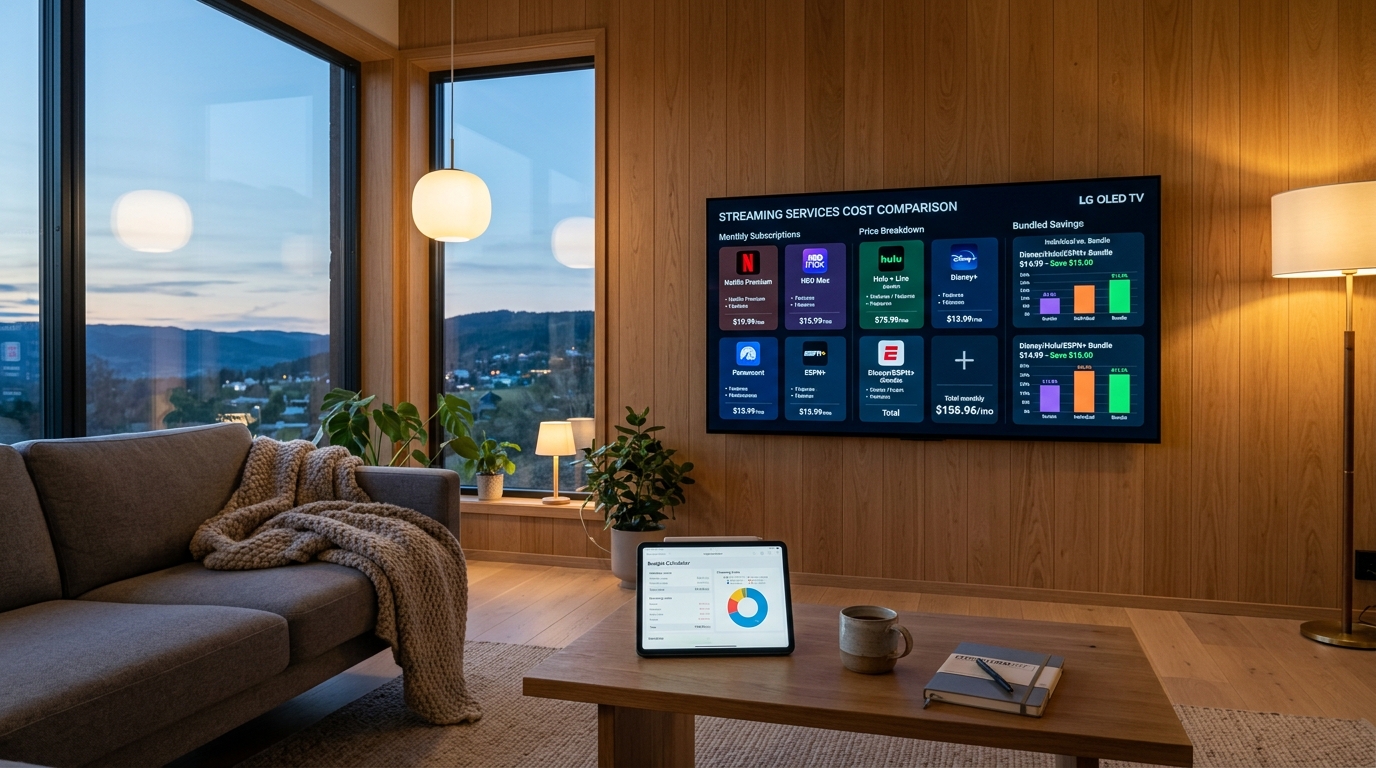
The biggest frustration consumers voice regarding traditional cable services is the discrepancy between advertised quotes and the final monthly statement. Regulatory filings show ancillary surcharges now account for nearly 40% of the average subscriber's invoice.
• Broadcast TV Fee ($24.50–$34.00/mo): Local broadcast channels transmit free over the air, yet cable operators bill subscribers an expensive surcharge for retransmission consent contracts. • Regional Sports Network Surcharge ($12.00–$19.50/mo): Any tier carrying regional athletic networks assesses an unremovable fee regardless of viewer interest. • Proprietary Set-Top Box Leases ($12.00–$15.00/box/mo): Outfitting three home screens with converter decoders costs more than $430 each year in ongoing rental equipment. • Wi-Fi Gateway Rental ($14.00–$18.00/mo): Leasing a standard internet modem and router adds up to $216 annually. • Franchise & Government Fees ($7.00–$13.00/mo): Municipal utility and public access fees passed straight onto the customer statement.
Traditional Cable Services vs. Modern IP Streaming
As physical cable television costs escalate, millions of viewers are unbundling their utilities. Instead of paying for expensive coaxial video tiers, subscribers keep their high-speed cable or fiber broadband and switch to agile internet television.
Carrier-grade platforms like View IPTV demonstrate how modern IP video surpasses legacy cable delivery: • Monthly Cost: Cable services cost $110–$180+ monthly vs. IPTVBoz at $14.99/mo or $59.99/year. • Channel Breadth: Cable offers 80–220 domestic channels vs. IPTVBoz offering 50,000+ live channels globally. • Image Quality: Cable compresses channels to 720p/1080i vs. IPTVBoz streaming native 1080p and 4K at 60 FPS. • Hardware Independence: Cable requires proprietary converter boxes vs. IPTVBoz running directly on Smart TVs, Fire TV Sticks, and Apple TVs with zero fees. • Annual Savings: Households switching to IPTVBoz save between $1,200 and $1,800 every single year.
For technical details on CATV signal engineering, explore our comprehensive cable television guide. To evaluate package tiers, review our breakdown of cable television plans and our TV and internet packages guide.
How to Optimize or Replace Your Cable Services
Whether you want to lower your current cable statement or cut the cord completely, follow these actionable recommendations:
1. Purchase Your Own DOCSIS Modem and Wi-Fi Router: Most cable operators allow you to bring your own compatible modem. Purchasing a certified DOCSIS 3.1 modem and Wi-Fi 6 router eliminates the $15 monthly gateway rental fee, saving you $180 every year while boosting wireless performance. 2. Audit Your Statement for Phantom Fees: Examine every line item on your latest bill. Look for inactive multiplex movie packages, wire protection plans ($5–$8/mo), and decoders on unused guest room televisions. Returning surplus equipment stops recurring lease charges immediately. 3. Downgrade to Broadband-Only and Switch to IPTV: The most effective cost-cutting measure is keeping high-speed cable broadband (300 to 500 Mbps for ~$45–$55/mo) while replacing traditional cable video with IPTVBoz. You retain blazing internet speeds while gaining 50,000+ channels and 4K live sports for just $14.99/mo.
Review our side-by-side rankings in our best streaming service comparison chart and our guide to the best streaming TV service.
Frequently Asked Questions
What services do cable companies typically provide?
Cable companies offer three primary residential utilities: broadband internet (via DOCSIS over coaxial and fiber lines), linear digital television programming, and digital VoIP phone service. Many operators also offer mobile phone service and smart home security packages.
Why are cable services becoming so expensive?
Rising cable bills are primarily driven by skyrocketing retransmission consent fees demanded by local broadcast networks, expensive sports programming carriage agreements, and recurring equipment lease charges for set-top boxes and modems.
Can I subscribe to cable internet without paying for cable TV?
Yes. Telecommunications regulations mandate that cable operators provide standalone internet access without requiring video or telephone subscriptions. You can easily keep high-speed internet while canceling cable television.
How do I avoid equipment rental fees on cable services?
You can eliminate modem and router rental fees by purchasing your own compatible DOCSIS 3.1 gateway. To eliminate television box fees, replace leased cable decoders with smart TV apps and modern IP video streaming services like IPTVBoz.
What is the best alternative to traditional cable services?
The premier modern alternative is pairing standalone fiber or cable broadband with a high-performance IPTV service like View IPTV. This combination delivers over 50,000 live channels, 4K sports, and expansive on-demand libraries for under $65 to $70 total per month.
Need Help Configuring Your Setup?
Our team is active on WhatsApp (+44 7934 683184) and email (tvplusone24@gmail.com) to walk you through playlist setup, recommend media players, or activate your subscription instantly.